
Factory & Quality
How ANBO Keeps KT Board Flat: Inside Our Factory
KT board looks simple until a container arrives warped. This is how our Foshan factory controls the variables that cause rejects — and what buyers should check before ordering.
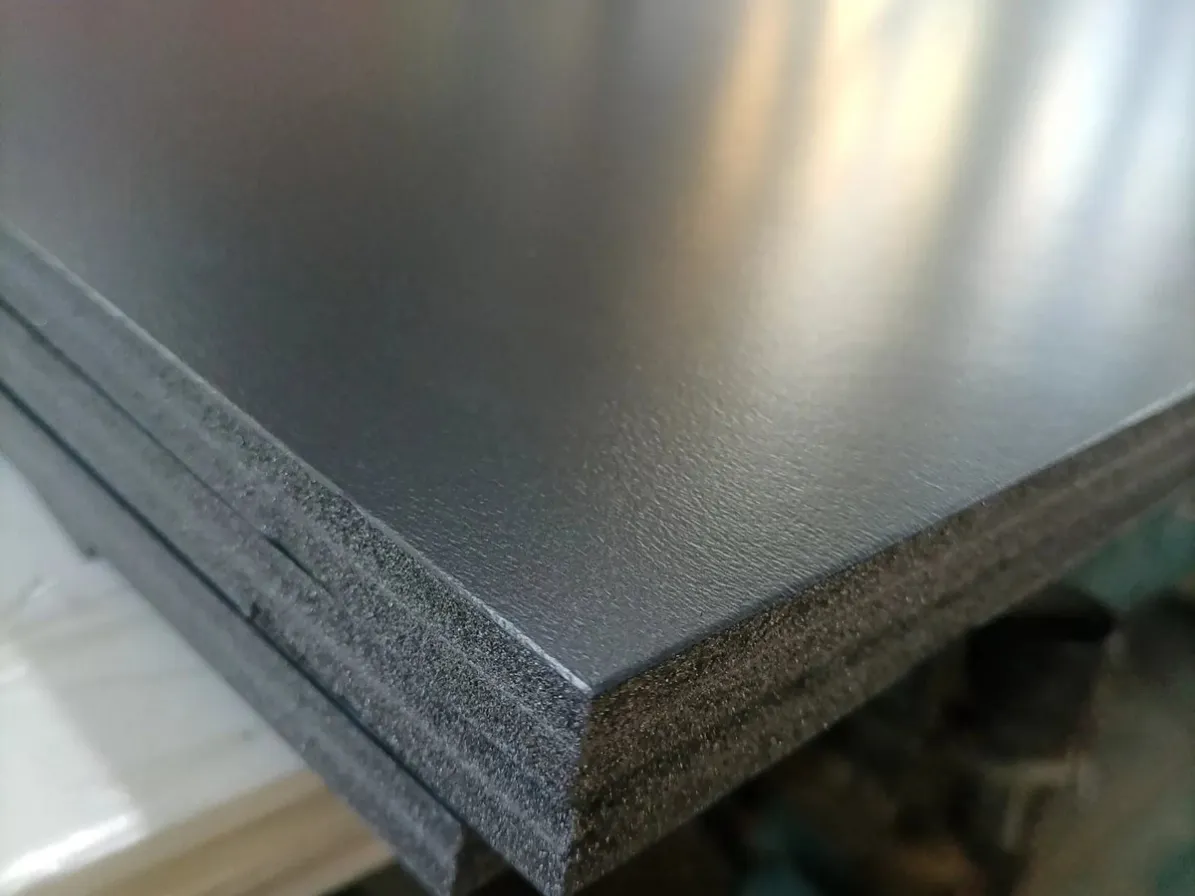
A flat KT board is not luck. It comes from four things working together: a single-piece core, a balanced facing, checks during the run — not only at the end — and flat packing and storage. Get one of them wrong and the board can still bow, even if it left the factory looking straight.
We have made foam board in Foshan, Guangdong, since 2010. Our annual foam board capacity is 40,000 tonnes, including 18 million PS sheets a year, exported to more than 100 countries. KT board is one part of that output, and it goes through the same quality system as the rest. This article explains what we actually do, so you can audit any supplier the same way — including us.
Why KT board warps in the first place
KT board is a sandwich: a polystyrene (PS) foam core between two facings. The core does not absorb water. The facing does, especially paper. When one side takes on moisture faster than the other, that side expands and the board bows toward the dry side.
Four causes cover most warped deliveries we hear about:
- A glued core. Some 5 mm boards are made by gluing two thinner sheets together. The glued joint can soften, shift, or de-bond when the board is cut, printed, or stored in humidity.
- One-sided moisture. One-sided printing, a damp store room, or a board left leaning against a wall will load one face and not the other.
- The wrong thickness for the span. A 5 mm panel is fine for a small poster. The same thickness, unsupported, will flex and read as warp on a panel above roughly A1 size.
- Leaning storage. Sheets stored on edge for weeks take a set. Once a large sheet has taken a bend, you cannot reliably flatten it back.
None of this is visible in a price list. Two suppliers can quote the same 5 mm, 1220 x 2440 mm sheet and deliver very different boards. That is why we start with the core, not the price per sheet.
Start with the core, not the price per sheet
Our 5 mm KT board uses a single-piece extruded PS core. There is no glued interface in the middle to fail.
In practice, that changes three things. The board is stiffer for its thickness. The cut edge is cleaner, because the blade meets one continuous core instead of a joint. And there is no core de-bonding to show up weeks later, after the print is mounted and framed.
The facing matters just as much. Our paper-faced board — model AB-HKZB — is our 5mm White Paper-Faced KT Board. It uses 127/157 g art paper on both sides. It gives a smooth, matte, printable surface for digital printing, screen printing,vinyl, and mounted prints. Paper-faced board is available in white, black, and ultra-white.
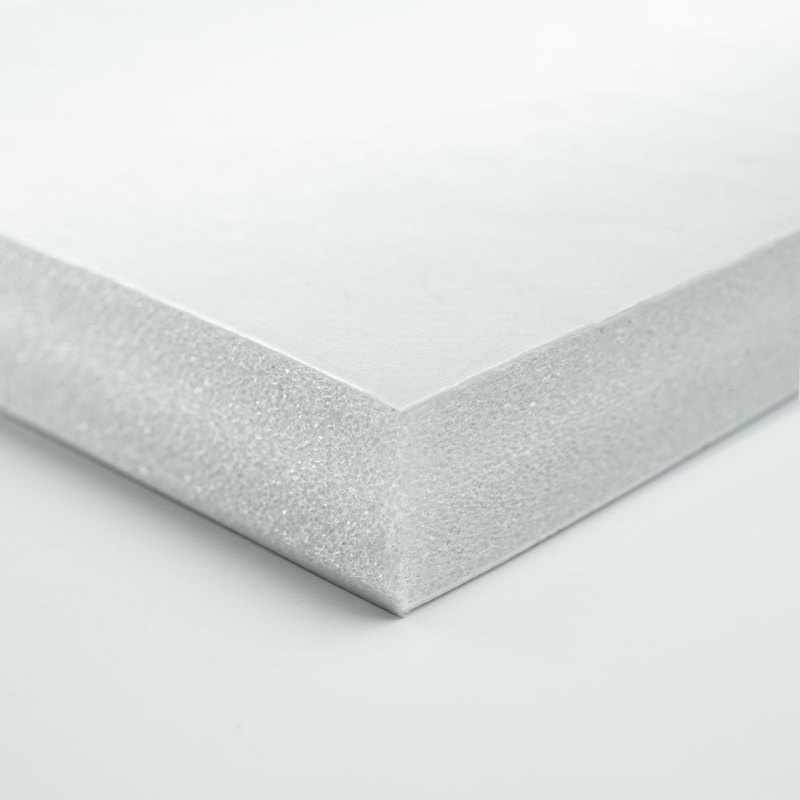
Our PS film-faced board — model AB-KT — is our 5mm White PS Film-Faced KT Board. It uses a PS film facing instead of paper. The film resists moisture and handling better, which helps in humid stores, exhibition halls, and retail displays. It comes in 3–10 mm, in white, ultra-white, blue, green, red, and yellow. The film surface prints differently from paper, so test ink and vinyl adhesion on a sample before a production run. Neither facing makes KT board weatherproof. For outdoor graphics, use an exterior substrate or a protected location your fabricator has confirmed.
Thickness is a range, not a single number. AB-KT is 3–10 mm. 5 mm is the default for most print and display work. 10mm Heavy-Duty Paper-Faced KT Board is the choice when the panel is large, will be handled a lot, or needs more rigidity. If a supplier cannot tell you whether the 5 mm core is one piece or two sheets glued together, that is the first question to ask.
Four quality checkpoints
Quality is not a final inspection at the end of the line. We check at four points, so drift can be corrected while the run is still running.
- Incoming material. Raw material and facing are checked against the approved specification before production starts. A facing that is out of specification — wrong paper weight, wrong film, wrong colour — does not go on the line.
- In-process. Thickness and sheet size are checked during the run. Boards outside the agreed range are removed. This is where a small drift in thickness becomes a flatness problem later, if it is not caught.
- Flatness and surface. Before packing, boards are checked for flatness, facing defects, and edge quality. A board that is bowed, cockled, or rough at the edge does not get packed.
- Pre-shipment. Final inspection confirms quantity, size, packing, and labels. Production photos and videos can be shared before shipment, so you see the actual boards, not a stock photo.
The point of the four checks is simple: catch a problem early, when it can still be fixed. A single final check can only sort good boards from bad ones. It cannot fix the run that made them.
Packing and storage: flat, always
A flat board can still arrive warped if it is packed or stored badly. We pack KT board flat on a pallet, in a PE bag and carton. Sheets are kept horizontal. They are never left leaning against a wall for long, in the factory or, we advise, in your store room.
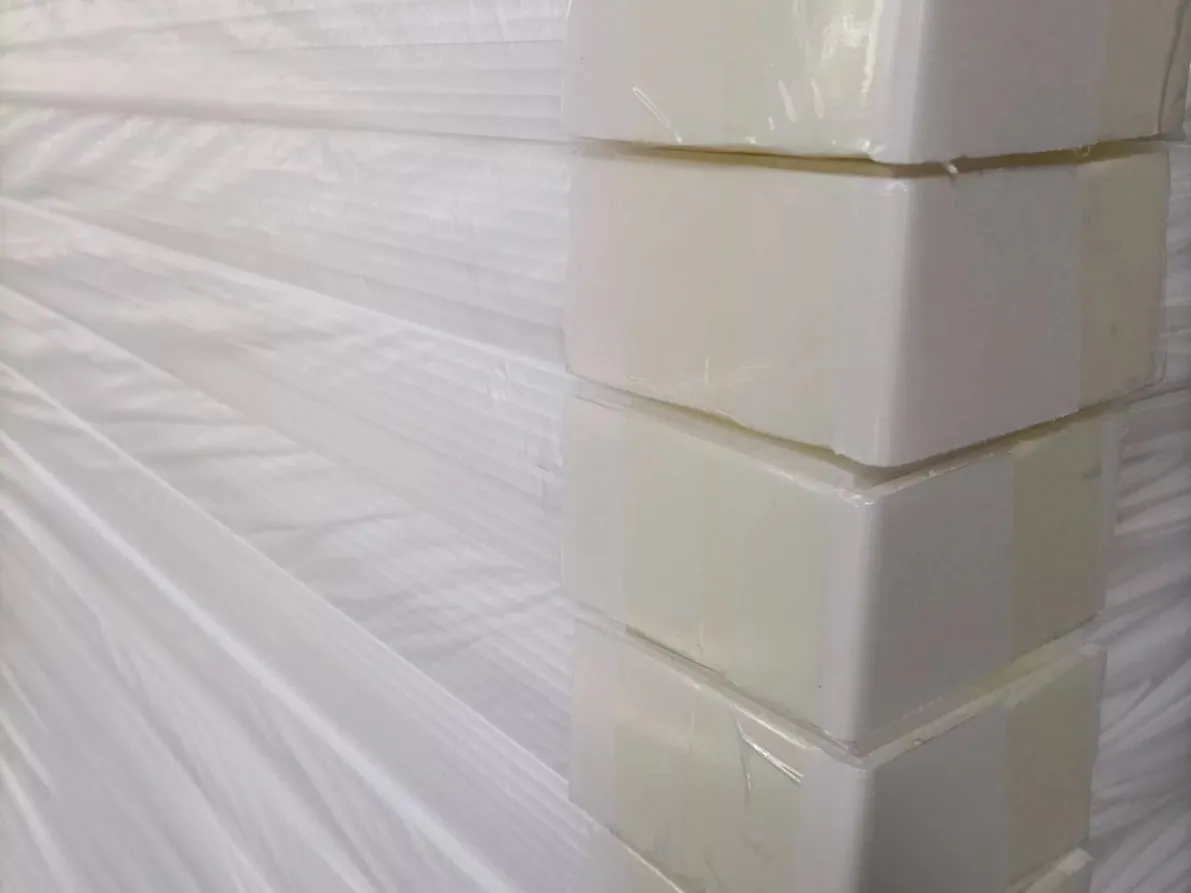
For buyers, two habits make the biggest difference:
- Let the board acclimatise. Leave it flat in the press room for 24 hours before printing, so both facings reach the same room conditions.
- Store it flat. Keep sheets horizontal on a pallet or rack. If space is tight, store them flat in smaller stacks rather than leaning a full sheet on edge.
If a job needs two-sided printing, print both sides or move to a thicker board. A one-sided heavy ink load will pull the board toward the printed face. For large panels, add a frame or backing. The facing alone will not solve a span problem.
Samples before containers
A sample board is the cheapest risk control in this business. We provide free samples, with courier cost refunded on a later order. Print on it, cut it, mount it, leave it flat in the store room for a week, and compare it with the board you are using today.
Regular sizes are stocked. Custom orders are normally 20–25 days after specification and sample approval — see Custom-Cut & OEM KT Board. If a supplier cannot tell you what is stock and what is custom, the lead time is a guess.
Try this one-day sample test before you commit to a volume order:
- Print a small graphic on both the paper-faced and the PS film-faced sample.
- Cut a 300 x 300 mm panel of each.
- Leave one in a dry room and one in the most humid space you have.
- After 24 hours, check for curl, edge swelling, and ink adhesion. Then mount a print on each and repeat.
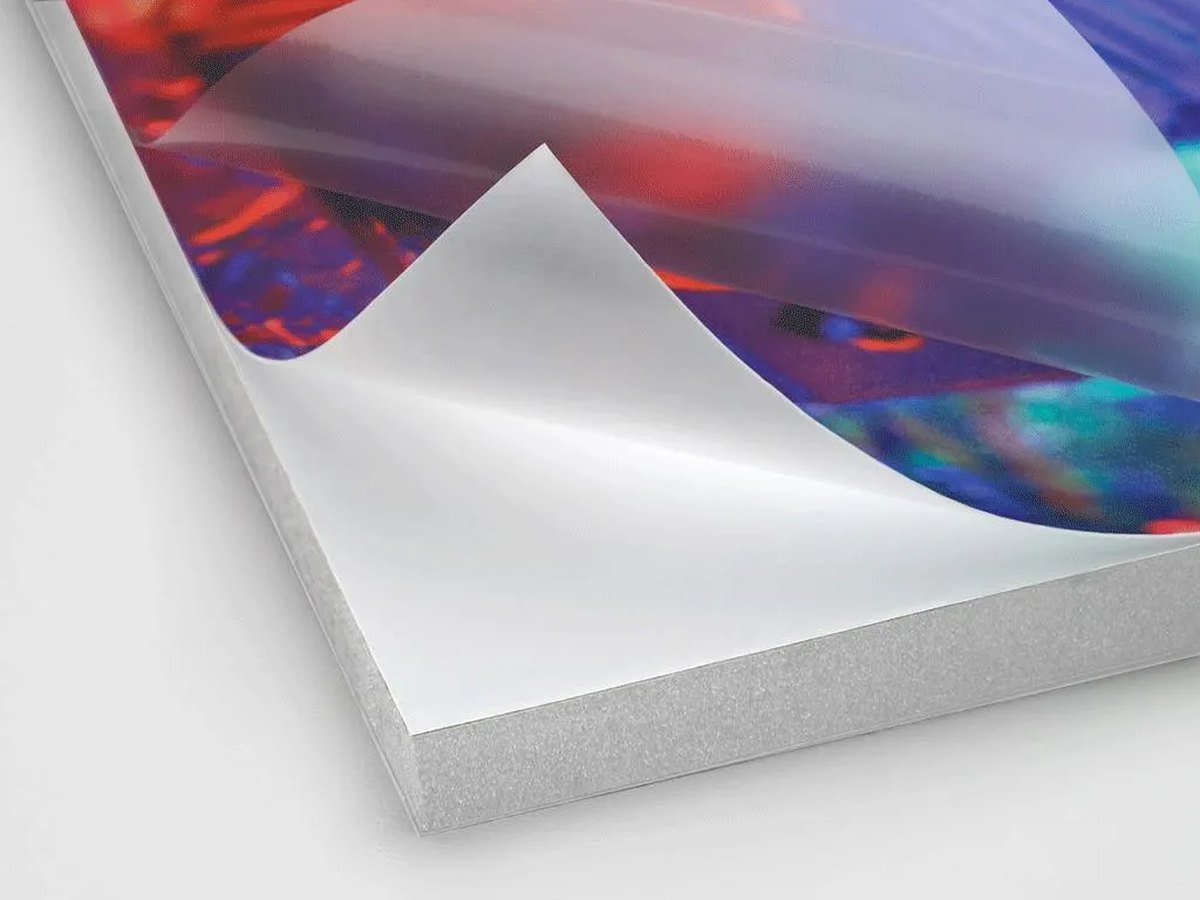
The result will tell you more than a specification sheet.
What to ask a KT board supplier
Use these questions with any factory, including ours:
- Is the 5 mm core a single piece or two sheets glued together?
- What is the facing — paper, PS film, or a mix? What paper weight, if paper?
- How are thickness, size, and flatness checked during the run, not only at the end?
- What is stock, and what is the real lead time for a custom size?
- Can you send a sample from the production specification, not a hand-made lab sample?
A factory that answers with specifics — core construction, paper weight, check points, lead time — is easier to audit than one that only sends a price list. Start with the core and the facing. Then compare the price.
Next step
Request a sample — tell us the print process and panel size you are using. We will confirm the closest stable specification, facing, and thickness for your job.
Q: Why does my 5 mm KT board warp after printing?
A: Usually one side has taken on more moisture than the other — one-sided printing, humid storage, or leaning sheets on edge. Let the board acclimatise flat for 24 hours before printing, store it flat, and for humid conditions consider PS film-faced board.
Q: Is paper-faced or PS film-faced board flatter?
A: Neither is automatically flatter. Paper-faced board prints easily and is the usual choice for dry indoor work. PS film-faced board resists moisture better, so it holds its shape longer in humid stores and exhibition use. Test both on a sample under your actual conditions.
Q: Can a warped KT board be flattened again?
A: Sometimes a slight bow will ease if the board is stored flat under even weight in a dry room, but a board that has taken a set from leaning storage or a glued core failure will not reliably return to flat. It is better to prevent warp with a single-piece core, balanced facing, and flat storage than to try to fix it afterwards.